Flu season is upon us once again. This time of year induces fear for many as the potentially lethal virus sweeps through universities, schools, and offices. Every year a new vaccine for the influenza virus must be created because new strains mutate every season through antigenic drift. This year’s flu is proving to be just as severe as the 2017-2018 season that was the deadliest in the past decade according to CNN reports discussed in this article from Time. Data released at the start of the new year reported in the article showed at least 6.4 million people in the United States have been diagnosed with influenza so far. Once more, 2900 people have died this season, 800 more than had been predicted by the CDC a week prior to releasing results. The flu has been particularly harsh in the past few years with deadly 2017-2018 season and the 2018-2019 season lasting 21 weeks. So what’s leading the charge this season in virulence? It may be related to this year’s vaccine.
Influenza has four different types of virus: A, B, C, and D. According to an article from Health, usually 75% of reported influenza cases are type A, but this season influenza B has been dominating. Influenza B is typically seen later in the flu season (mid to late spring), but symptoms mirror influenza A. However, influenza B infections can be more severe in children leading to more hospitalizations and deaths. Luckily, the flu vaccine protect against both influenza A and B. According to the CDC, this year’s vaccine will be quadrivalent with updates to some the protected strains for influenza A (H and N components) and the same strains protected from influenza B (B/Victoria and B/Yamagata components). The CDC projects that this year’s vaccine will be between 40-60% effective, but do not rule out significant antigenic drift.
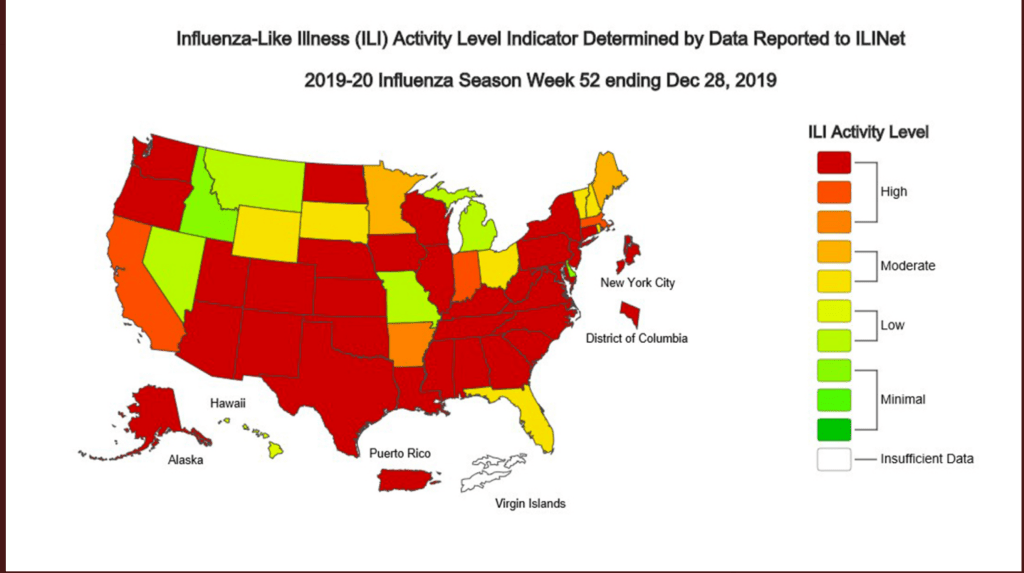
Despite the high risk of flu this season visualized in the graphic above, the flu vaccine is still the best bet in protecting against infection. Even for those who get the infection while having received the vaccine, the infection is less lethal and severe. While the vaccine is of course never 100% effective, some protection is always better than no protection. Especially with the influenza B strain spreading so rapidly this season, protecting vulnerable infants who are too young to receive the vaccine should be a top priority. The more adults who are vaccinated, particularly those who are frequently around children, the better protected the overall population will be.

 Victims of Virulence